The movement to establish the Virginia Society of the Sons of the American Revolution began in Washington, D.C., in early 1890. On February 10, several Virginia Congressmen convened in the nation’s capital and appointed a committee to organize a state society without delay. The committee reconvened at the Capitol on February 28, adopted a constitution and bylaws, and elected the following distinguished Virginians as officers:
President – The Honorable William Wirt Henry of Richmond
Grandson of patriot Patrick Henry, Virginia’s first post‑colonial governor and famed Revolutionary orator. A distinguished attorney, historian, and legislator, Henry was widely regarded as one of Virginia’s foremost interpreters of Revolutionary history.
Vice President – Gen. W. H. F. “Rooney” Lee, of Burke’s Station, Fairfax County
Great‑grandson of patriot Henry Lee II and member of the extended Revolutionary Lee family of Virginia. A Harvard‑educated statesman, Virginia legislator, and U.S. Congressman, Lee brought stature and public service experience to the Society’s founding.
Vice President – George Washington Ball of Alexandria
His patriots include being the grandson of Colonel Burgess Ball; grandson of Thomson Mason (1759–1820); great-grandson of Charles Washington; and great-grandson of Founding Father George Mason. He joined the SAR on November 23, 1889, becoming one of the earliest Virginians to join the National SAR. Ball was an enthusiastic supporter of lineage‑based patriotic organizations and helped establish the Society’s early leadership. He was first assigned National SAR No.: 77 with New Jersey Society, then reassigned National SAR No. 1902 when he joined the DC Society.
Secretary – Thomas Nelson Page of Richmond
Treasurer – Joseph Poryall of Richmond
Registrar – J. William Jones of Richmond
In the coming months, efforts were focused on distributing mailings and recruiting members from known descendants of Revolutionary War soldiers from across the Commonwealth to establish the initial charter. In June, the National Society delegated to Lt. J. C. Cresap, USN, who was serving as the National Society’s Secretary General, the authority to re-organize and establish a charter in Virginia. Professor G. Brown Goode, a native Virginian and Registrar for the DC Society, was invited to assist.
On July 7, 1890 in Richmond, the Virginia Society was formally chartered with 62 members. Permanent officers were elected for the coming year as follows:
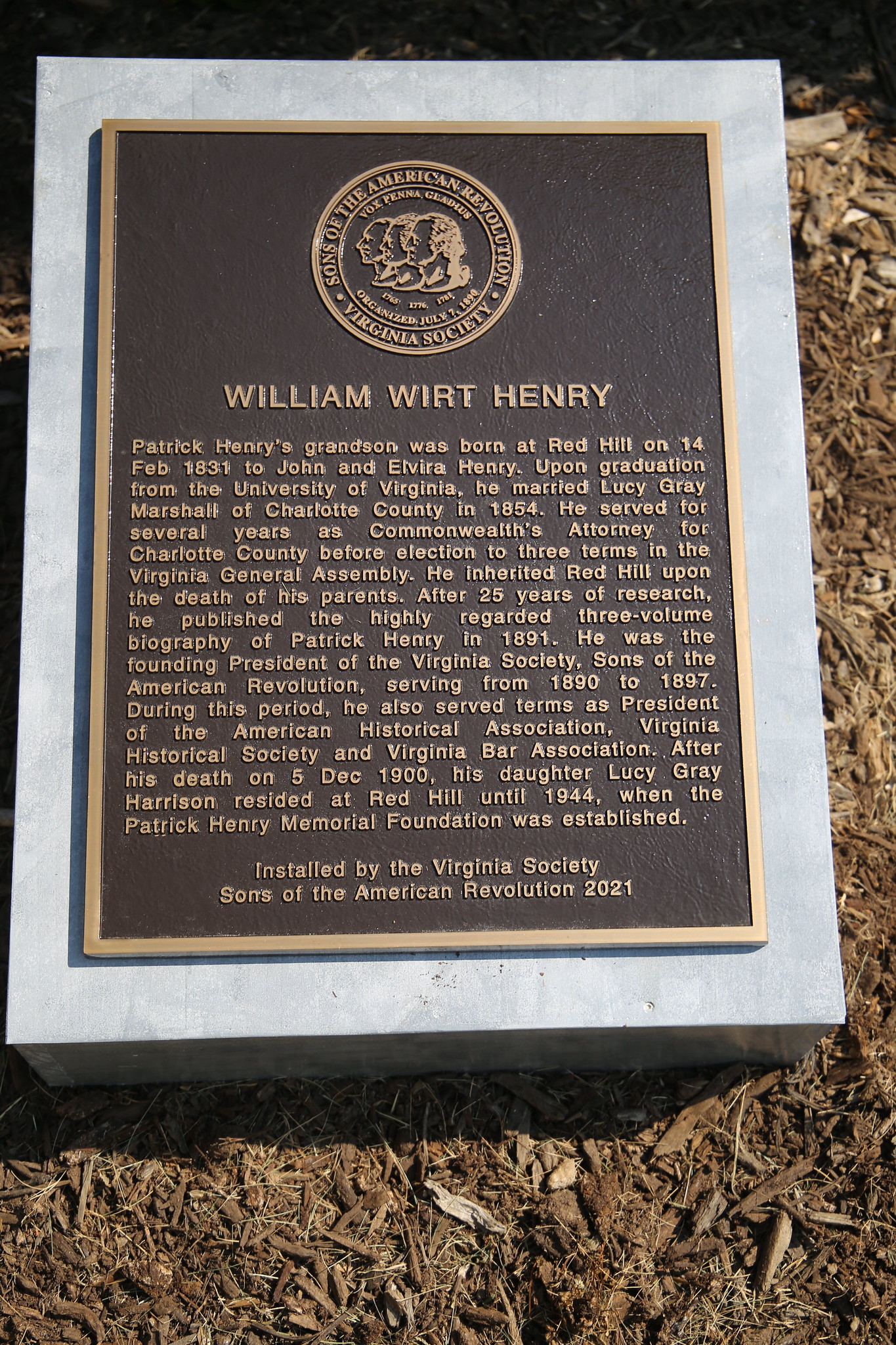
President – The Honorable William Wirt Henry (1831–1900)
Grandson of Patriot Patrick Henry, Virginia’s first post‑colonial governor and famed Revolutionary orator. A distinguished attorney, historian, and legislator, Henry was widely regarded as one of Virginia’s foremost interpreters of Revolutionary history. He attained National SAR No.: 1551 and Virginia SAR No.: 1.
Vice President – Gen. W. H. F. “Rooney” Lee (1837–1891)
Great‑grandson of Henry Lee II and member of the extended Revolutionary Lee family of Virginia. A Harvard‑educated statesman, Virginia legislator, and U.S. Congressman, Lee brought stature and public service experience to the Society’s founding. National SAR No.: 1917; Virginia SAR No.: Not assigned (deceased before issuance)
Secretary – Thomas Nelson Carter (1856–1930)
Great-great-grandson of Thomas Nelson Jr., signer of the Declaration of Independence and wartime Governor of Virginia. A respected genealogist and record‑keeper, Carter’s administrative skill helped establish the Society’s early organizational framework. He holds National SAR No.: 1552; Virginia SAR No.: 2.
Treasurer – Levin Joynes (1840–1917)
Great‑grandson of Colonel Levin Smith Joynes (1753–1794), a Continental Line officer of the Virginia Line who entered the war as a Captain in the 9th Virginia Regiment, rose to Lieutenant Colonel Commandant, and served 7 years and 10 months in the Continental Establishment. Joynes was wounded and taken prisoner at the Battle of Germantown, held as a British POW for three years, and later recognized by both Virginia and the United States with full‑Colonel bounty land awards. A meticulous attorney and civic leader, Treasurer Joynes provided the financial stewardship that stabilized the Virginia Society during its formative years. He holds National SAR No.: 1555; Virginia SAR No.: 5.
Registrar – Robert Alonzo Brock (1839–1914) Maternal great-grandson of Corporal Pettus Ragland (c.1730–1807) of the Hanover County Militia under Colonel Richard Taylor. Brock was one of Virginia’s most influential archivists and historical editors. As curator of the vast Brock Collection and longtime editor of the Southern Historical Society Papers, he preserved an extraordinary body of Virginia manuscripts, genealogies, and historical records. His work provided the Virginia Society with rigorous standards for lineage documentation and ensured that its earliest membership records were maintained with scholarly care. Brock joined the Virginia Society on July 7, 1890, becoming one of its first members, and is listed as National SAR No. 1566; Virginia SAR No. 16.
The Managers of the Virginia Society at its charter founding were Gen. Joseph Reid Anderson, Prof. George Brown Goode, H. Landon Cabell, Roswell Page, Edmund Carrington Venable, Joseph Bryan, Hon. John Randolph Tucker, and Wyndham Robertson Meredith.
The first Minute Books of the Virginia Society—documents of significant historical value—are preserved today at the Virginia Historical Society in Richmond. Notable Secretaries of the Virginia Society included William MacFarlane Jones and Kenneth C. Patty. Jones, who joined in 1893, managed the Headquarters office from its opening until his death in December 1951. Kenneth C. Patty served as Secretary–Registrar from 1954 until his passing in March 1967.
Real Sons of the American Revolution in the Virginia Society
Among the earliest members of the Virginia Society were three of the rarest compatriots in SAR history: Real Sons of Revolutionary War soldiers. A “Real Son” was a man whose father rendered qualifying service in the American Revolution and who lived long enough to join the SAR after its founding in 1889. Only a small number of such men were ever enrolled nationwide, and the Virginia Society is privileged to have counted three among its earliest compatriots.
Gen. Joseph Reid Anderson (1813–1892)—Manager, Virginia Society SAR (1890) •Documented in the 1891 Year Book
Gen. Joseph Reid Anderson was the son of William Anderson, a Revolutionary War patriot who rendered qualifying service to the cause of American independence. Born in 1813, Joseph Reid Anderson therefore stands as a Real Son of the American Revolution, one of the very few Virginians whose father served in the Continental forces and who lived into the era of the SAR’s founding.
Owner of the Tredegar Iron Works and a prominent Virginia civic leader, was elected as one of the Managers at the organizational meeting of the Virginia Society on July 7, 1890. The Year Book of the Societies Composed of Descendants of the Men of the Revolution (1891) records him as the son of William Anderson, a Revolutionary War patriot, establishing him as a Real Son of the American Revolution. His son, John Francis Thomas Anderson, listed as grandson of William Anderson, also joined as a charter member. Gen. Anderson died in 1892, several years before the Virginia Society adopted standardized application forms in 1896; thus, the 1891 Year Book serves as the authoritative documentation of his membership and Real Son status. Their participation represents a rare instance of two generations with direct ties to the Revolutionary era present at the founding of the Virginia Society.
Miles Turpin Phillips—National SAR No. 1559 • Virginia SAR No. 9
Miles Turpin Phillips was the son of Mourning Phillips (1758–1831), who served as a Private in the Virginia Continental Line. Born late in his father’s life, Miles Phillips joined the Virginia Society in 1895 and holds Virginia Society membership number 9, placing him among the first compatriots enrolled. His membership provided a direct, living link to a soldier of the Continental Army and to the founding generation of the Republic.
Richard Fox—National SAR No. 1771 • Virginia SAR No. 71
Richard Fox was the son of Ensign Nathaniel Fox, an officer in the King William County Militia during the Revolution. His Virginia Society number, 71, reflects his place within the first generation of members. Through his membership, the service of a Tidewater militia officer—part of one of Virginia’s oldest military traditions—was carried forward into the modern era.
These Real Sons formed a tangible connection between the Revolutionary War and the early years of the Virginia Society. Their presence underscored the immediacy of the Revolution’s legacy at the time of the Society’s founding and remains a meaningful part of the Virginia Society’s history.
The Modern Era of the Virginia Society
Since its founding in 1890, more than 11,000 Virginians have joined the Sons of the American Revolution to honor the legacy of the patriots who secured America’s independence. Today, the Virginia Society continues that mission through a wide range of programs that serve both history and the community:
Sharing Virginia’s Revolutionary history through public events, commemorations, and educational outreach
Supporting local chapters across the Commonwealth, helping them grow and strengthen community engagement
Recognizing modern‑day public service, including awards for firefighters, police officers, EMTs, 911 dispatchers, and citizens who display heroism
Honoring veterans, with programs that support those who have served and continue to serve our nation
Encouraging youth education, including history programs, scholarships, and classroom partnerships that inspire students to learn about the American Revolution
Preserving historical records, including thousands of member genealogies and archival documents
Marking and protecting the graves of Revolutionary War patriots, ensuring their service is remembered
Celebrating key Revolutionary anniversaries, especially those tied to Virginia’s battles, leaders, and patriot units
Through these efforts, the Virginia Society keeps alive the memory of the patriots of 1776 while serving the communities of 2026.
Virginians at the National SAR
Six distinguished members of the Virginia Society have served as President General of the National Society of the Sons of the American Revolution.
Alvan Herbert Foreman of Norfolk — President General, 1947–1948
Howard L. Hamilton, Ph.D. of Charlottesville — President General, 1982–1983
Reon G. Hillegass, Jr. of Norfolk — President General, 1996–1997
Bruce A. Wilcox of Alexandria — President General, 2007–2008
Joseph W. Dooley of Falls Church — President General, 2013–2014
Michael J. Elston, Esq. of Woodbridge — President General, 2025–2026
National SAR Congresses Hosted in Virginia
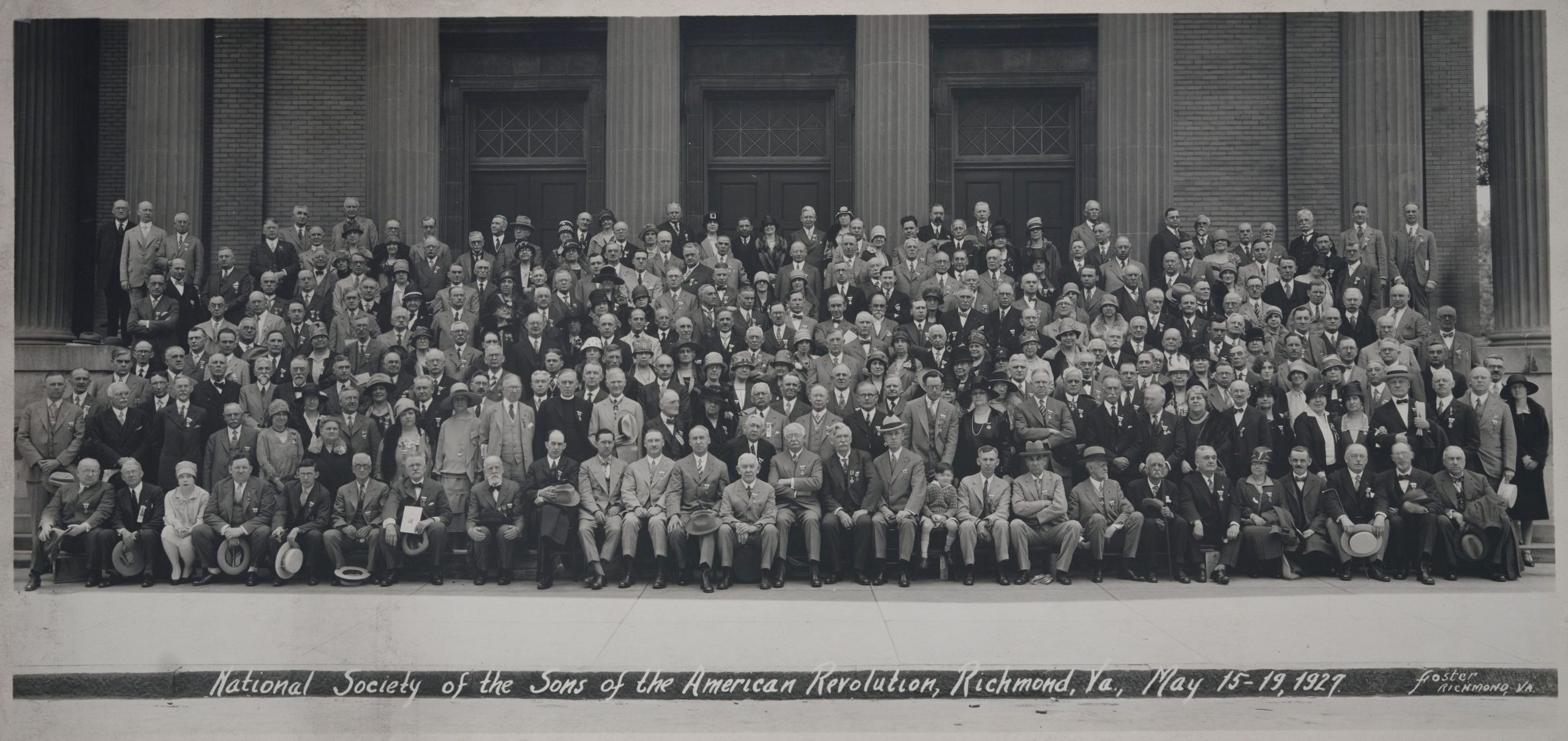
Throughout its history, the Virginia Society has played a prominent role in the national life of the Sons of the American Revolution. One of the clearest demonstrations of this leadership is the number of times Virginia has hosted the National Congress, bringing delegates, officers, and Presidents General from across the country to meet in the Commonwealth.
1896 – 7th Congress, Richmond
1927 – 38th Congress, Richmond (see photo below)
1942 – 53rd Congress, Williamsburg
1954 – 64th Congress, Williamsburg
1968 – 78th Congress, Williamsburg
1988 – 98th Congress, Tysons Corner
1992 – 102nd Congress, Norfolk
2007 – 117th Congress, Williamsburg
2020 – 130th Congress, Richmond (Cancelled)
These gatherings reflect both Virginia’s historic importance in the American Revolution and its continuing influence within the National Society.
Major Commemorations and Historical Initiatives
The Virginia Society commemorates numerous battles, sites, and events of the American Revolution across the Commonwealth each year. In addition to these regular observances, the Society has also undertaken a number of distinctive commemorative efforts and historical initiatives. The examples below reflect moments when the Virginia Society played a leading role in marking Revolutionary history, supporting national remembrance, or advancing projects of particular significance to Virginia’s patriotic heritage.
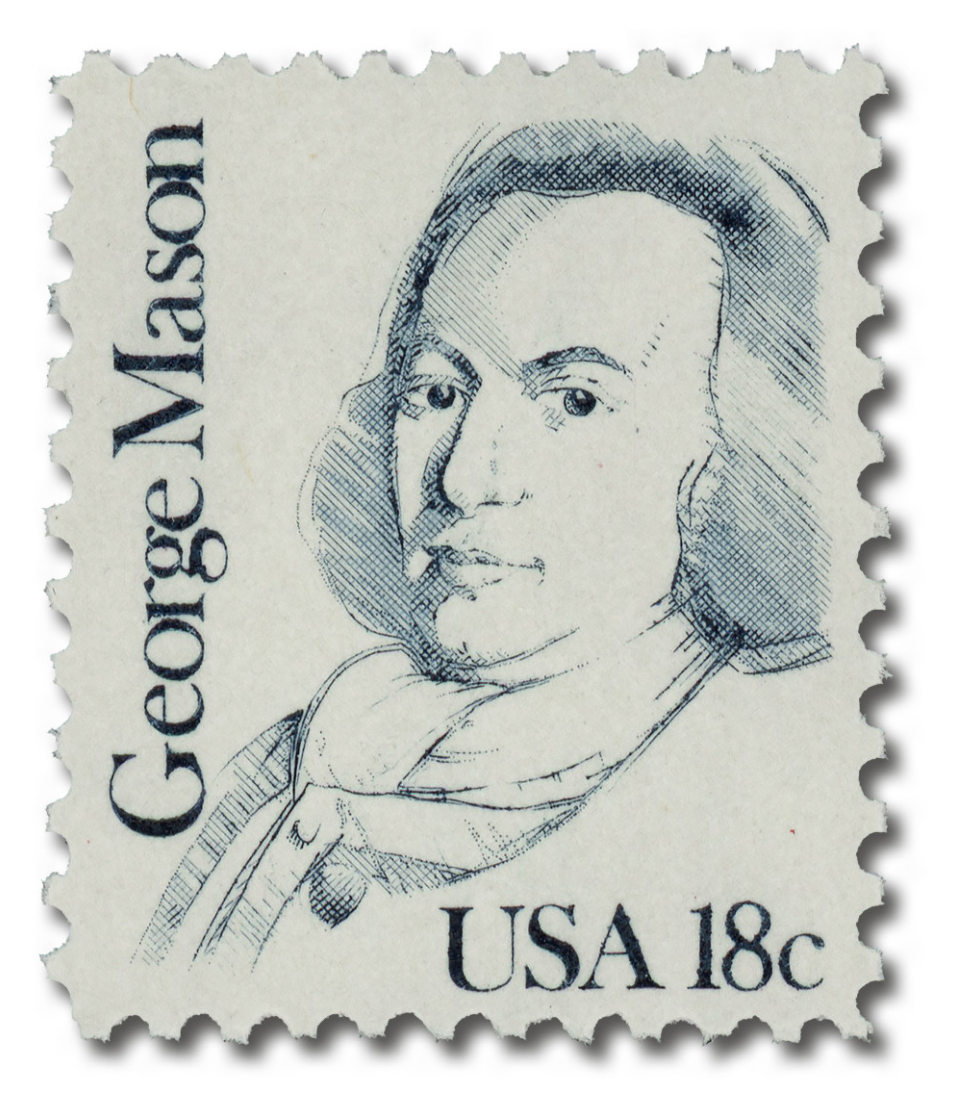
The successful effort to honor George Mason of Gunston Hall, the brilliant statesman and author of the Fairfax Resolves in 1774, on a United States postage stamp was led by Conrad Mook of the George Mason Chapter. The stamp was issued in May 1981.
The annual commemoration of the Battle of Yorktown on October 19 receives major support from the Virginia Society. As part of this observation the Virginia Society annually sponsors a wreath laying ceremony at the grave of General Thomas Page Nelson, a signer of the Declaration of Independence. The Virginia Society is a member of the Yorktown Day Association.
The annual commemoration of the Battle of Point Pleasant (now in West Virginia) in early October was initiated by and receives major support from the Virginia Society. As a part of the Memorial Ceremony, the President of the Virginia Society and other State Society Presidents and SAR Chapter Presidents place memorial wreaths on the graves of the Virginia militiamen buried there.
In the spring of 1983, the Virginia Society commemorated the presence of Virginia patriots at Valley Forge by dedicating a monument at the Valley Forge National Park. The monument was made possible by gifts from many compatriots throughout the Virginia Society and by a bequest from the estate of a former member.
The Wilderness Road State Park and U.S. National Park cooperative venture received official status in the National Societies list of Historic Celebrations during the fall Trustees Meeting in 2004. The Virginia Society participates in the wreath laying event on the 2nd weekend of May each year which is hosted by the Martin’s Station Chapter. The wreath laying commemorates the pioneers who traversed the Wilderness Road and those who manned and defended the outpost at Martin’s Station. The outpost served as a beacon of light on the Wilderness Road as the pioneers journeyed through the Cumberland Gap.
Continuing the Legacy
From its founding in 1890 through the present day, the Virginia Society has remained committed to preserving the memory of the Patriots who secured American independence. Early members — including descendants of Continental Line soldiers, county militia officers, and even two Real Sons whose fathers served in the Revolution — established a tradition of historical stewardship that continues to define the Society.
Throughout the twentieth century, the Virginia Society expanded its chapters, strengthened its educational and commemorative programs, and supported national SAR initiatives. Its members have participated in historical preservation, youth outreach, patriotic observances, and community service across the Commonwealth. The Society has also played a leading role in marking Revolutionary War sites, supporting research, and honoring the service of Virginia’s Patriots.
Today, the Virginia Society is one of the largest and most active state societies in the National Society of the Sons of the American Revolution. Its work reflects the same principles that guided its founders: to honor the memory of the men and women of the Revolution, to promote the study of American history, and to inspire future generations with the ideals of liberty and civic responsibility.
The story of the Virginia Society is still being written. More than a century after its founding, the Society continues to uphold the legacy of the Patriots of 1776 and the compatriots who first gathered in Richmond in 1890 to ensure that their sacrifices would never be forgotten.
 The movement to establish the Virginia Society of the Sons of the American Revolution began in Washington, D.C., in early 1890. On February 10, several Virginia Congressmen convened in the nation’s capital and appointed a committee to organize a state society without delay. The committee reconvened at the Capitol on February 28, adopted a constitution and bylaws, and elected the following distinguished Virginians as officers:
 These gatherings reflect both Virginia’s historic importance in the American Revolution and its continuing influence within the National Society.
 The successful effort to honor George Mason of Gunston Hall, the brilliant statesman and author of the Fairfax Resolves in 1774, on a United States postage stamp was led by Conrad Mook of the George Mason Chapter. The stamp was issued in May 1981.